Brain fog
That slower mental "startup time" — walking into a room and forgetting why, or losing a word mid-sentence. Common, and usually not a sign of anything serious on its own.
Guide · Updated for 2026
Walking into a room and forgetting why. Losing a word that was just there. If that sounds familiar, you're not alone — and it's worth understanding what's actually going on before assuming the worst.
Read the Complete Guide ↓01 — The Shift
It's rarely one dramatic moment. It's smaller than that — a name that takes an extra second, a train of thought that slips mid-sentence. Most people notice a combination of small changes that quietly add up over a few years.
That slower mental "startup time" — walking into a room and forgetting why, or losing a word mid-sentence. Common, and usually not a sign of anything serious on its own.
Sustained attention tends to shorten with age. A task that once held your attention for an hour may now ask for a break after twenty minutes — and that can feel frustrating before it feels explainable.
Sleep quality, stress load, and nutrition all influence cognitive sharpness — and all three tend to shift after 45 in ways that quietly compound each other.
If this already sounds familiar, you may want to skip ahead to what people are trying.
See What May Help →02 — The Science

None of this happens for one single reason, which is exactly why generic advice like "sleep more, stress less" so often feels incomplete. Cognitive function depends on a handful of interconnected systems — here's the short version of each.
The brain uses a disproportionate share of the body's oxygen and glucose. Circulation quality affects how well neurons are fed, moment to moment — which is part of why a short walk can clear your head faster than caffeine.
Chemical messengers like acetylcholine are tied to memory formation and recall speed — and their levels are influenced by diet and micronutrient intake more than most people realize.
Low-grade, chronic inflammation is increasingly studied as a factor in age-related cognitive changes, distinct from acute illness or injury — a slow background process rather than a single event.
The brain is especially sensitive to oxidative stress, in part because it burns so much energy. Diets and supplementation rich in antioxidants are a recurring theme in cognitive-aging research.
This is the exact category more people are researching for themselves when the usual advice doesn't feel like enough on its own.
So what actually helps? It starts with what's on your plate — and a few habits that take no extra time out of your day.
See What the Research Says ↓03 — Nutrition
Long before any formula enters the picture, research keeps circling back to the same short list of nutrients — the kind already sitting in a well-stocked kitchen.
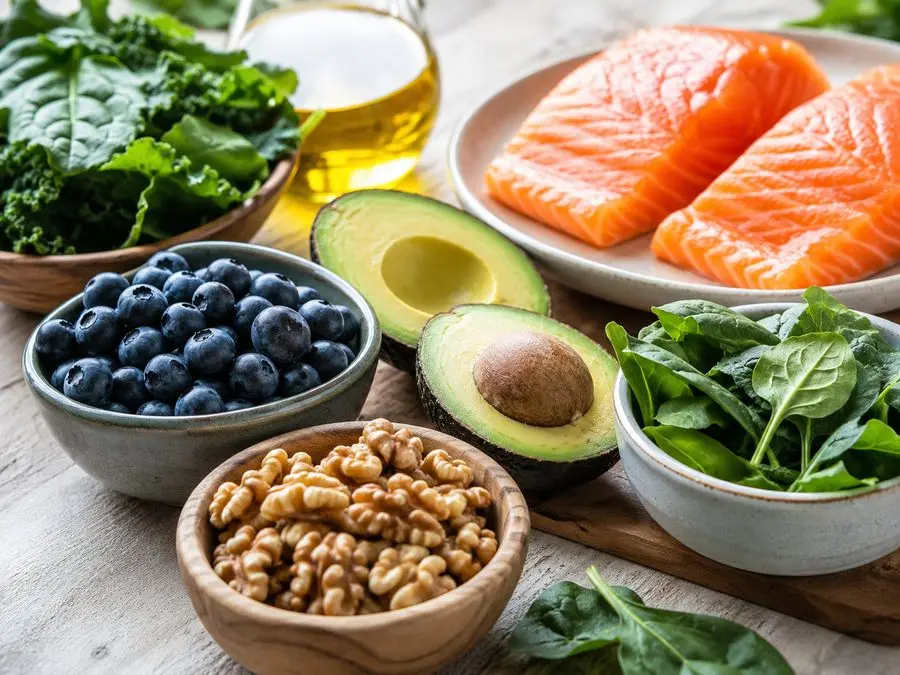
Nutrition is one of the few levers within direct control — starting today, not someday.
04 — Daily Habits
Alongside what's on your plate, a handful of ordinary habits show up again and again in cognitive-health research — none of them dramatic, all of them cumulative.

A steady morning routine, built one small habit at a time.
05 — What People Are Trying
Diet and daily habits are the foundation — nothing changes that. But many people over 45 choose to pair those habits with a natural, non-prescription formulation, designed to support rather than replace the fundamentals. Reported focus areas include:
These statements describe general wellness support and have not been evaluated by the FDA. This is not a substitute for medical advice — see the full disclaimer below.
If the science above resonated, the full formula breakdown is worth five minutes of your time.
Checked out by 12,643+ readers looking into the current formula.
See the Full Formula Breakdown →06 — Questions Readers Ask
No. It's a dietary supplement, not a drug, and it isn't intended to diagnose, treat, cure, or prevent any disease.
This varies by person. Supplement-based approaches are generally considered a gradual, cumulative habit rather than an instant fix — closer to exercise than to medication.
Anyone pregnant, nursing, taking medication, or managing a medical condition should talk to a physician before starting any new supplement.
The complete formulation, sourcing, and label details are on the official product website, linked throughout this page.
Diet and lifestyle are the foundation — research consistently points there first. A supplement is generally viewed as a complement to those habits, not a substitute for them.
No. Occasional brain fog is common and usually unrelated to any diagnosable condition. Persistent or worsening memory issues are worth discussing with a physician.
Possibly — as with any supplement. Always check with a physician or pharmacist if you take prescription medication.
No. This is an over-the-counter dietary supplement, not a prescription product.
Usage instructions are provided on the official product label and website — always follow the manufacturer's directions.
Through the official website. That's the most reliable way to get the current formulation and any manufacturer guarantees.

You've read the science and the habits behind it. The full ingredient breakdown, sourcing, and current offer are one click away.
Check Current Availability & Pricing →